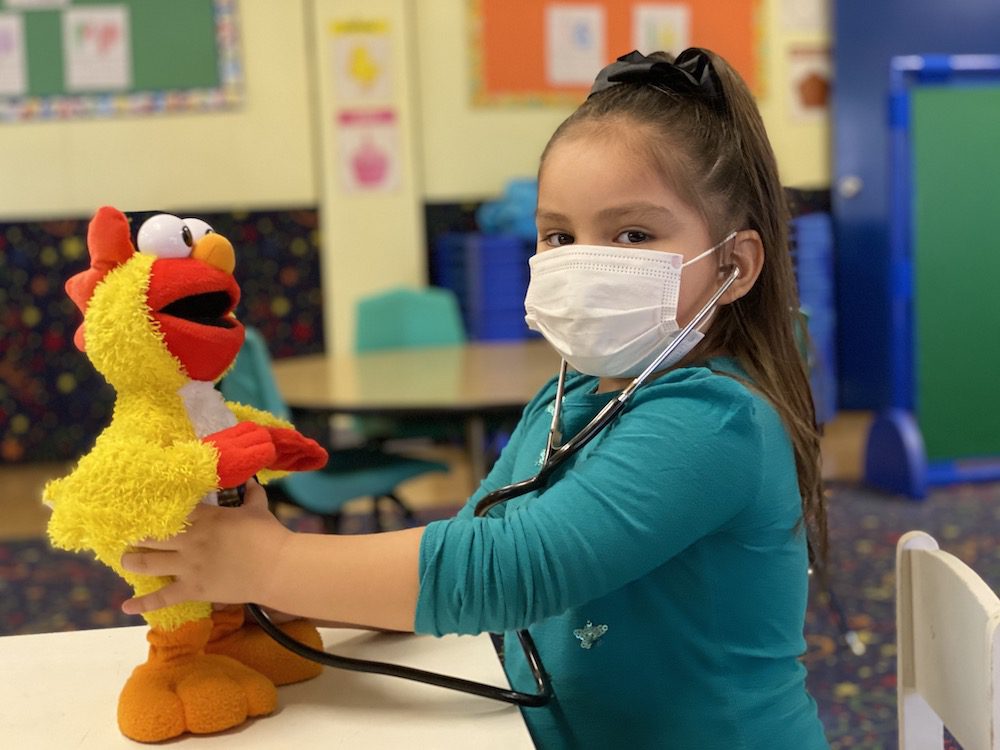
“Dr. Halsey”

Common Childhood Illnesses & Treatment

Expand allClose all

What is the Flu?

What is the Flu? ALWAYS CONSULT YOUR CHILD’S PHYSICIAN.


Influenza, commonly called the flu, is an infection of the respiratory tract caused by the influenza virus. Signs of the flu include sudden onset of headache, chills, and feeling generally miserable. Respiratory symptoms like nasal congestion, cough and sore throat appear, and the flu sufferer often experiences extreme fatigue and muscle aches in the back and legs. Fever between 100 and 103 degrees Fahrenheit is typical in adults, and is often even higher in children.


Influenza rarely causes stomach upset; however, young children may have nausea and vomiting during the most severe phase of the flu. What is popularly called “stomach flu” is usually another malady: gastroenteritis. Bacteria, toxins, or viruses other than influenza are the usual causes of gastroenteritis. Other illnesses like strep throat, measles, and chickenpox sometimes have flu-like symptoms. It’s important to see a doctor if symptoms persist, become severe or localized in the throat, stomach or lungs, or if other symptoms such as skin rash, vomiting or behavioral changes occur.

 
In addition to getting vaccinated, the single most important step you can take to help prevent your children from getting the flu is to wash their hands.

According to our Illness Policy, if a child shows these symptoms, he/she will need care at home away from other children for at least 24 hours until ALL symptoms have stopped. (No vomiting. No diarrhea. No fever. No Chills. No Body Aches. No Upset Stomach) It is up to your child’s teachers and directors to decide if a child is ready to come back.  Please call the school before returning to assure your child will not be turned away when you come to school.


If your child will be out for any reason please call or email the school by 10:00 a.m.


818-992-1942 • Sick@HalseySchools.com

Permalink. Mark as helpful. 1

What is Thrush?

What is ThrushALWAYS CONSULT YOUR CHILD’S PHYSICIAN.


Thrush is a yeast infection that causes white patches in the mouth and on the tongue. A yeast called Candida causes thrush because babies’ immune systems are not yet strong enough to control the growth of the yeast.


The most common symptoms of thrush are white patches that stick to the inside of the mouth and tongue. In babies, it is easy to mistake thrush for milk or formula. It looks like cottage cheese or milk curds. Don’t try to wipe away these patches, because you can make them red and sore. Some babies with thrush can be cranky and do not want to eat.

In most cases, doctors can diagnose thrush just by looking at the white patches and will prescribe an antifungal medicine such as nystatin liquid. In most cases, you will put the medicine directly on the white patches. When a baby has thrush, the yeast can cause a diaper rash at the same time as thrush. Your baby may need nystatin cream or ointment for his or her diaper area.

If your baby has thrush, it may help to:

  • Clean bottle nipples and pacifiers regularly using hot water.
  • Clean your nipples with medicine, such as nystatin, if you breast-feed your baby. Breast-feeding mothers and babies can pass a yeast infection back and forth.
  • Dry your nipples and apply lanolin lotion after breast-feeding.


According to our Illness Policy  if a child shows symptoms, he/she will need care at home away from other children for 24 hours after being treated with doctor prescribed anti-fungal medication. Children will need a doctors note to return. Please call the school before returning to assure your child will not be turned away when you come to school.
 

 If your child will be out for any reason please call or email the school by 10:00 a.m.

818-992-1942 • Sick@HalseySchools.com

Permalink. Mark as helpful.

What is Croup?

What is Croup? ALWAYS CONSULT YOUR CHILD’S PHYSICIAN.


Croup is an infection caused by a virus that causes the trachea (windpipe) and larynx (voice box) to swell. It is usually part of a cold. Croup causes a fever, hoarseness and a barking, hacking cough. It also may cause a crowing noise (called stridor) when the child breathes in through the narrowed windpipe. Croup usually lasts 5 to 6 days. Symptoms may be worse at night. Croup symptoms most commonly occur in children 1 to 3 years old.


Make sure that your child gets plenty of rest and plenty to drink. When your child has a croupy cough, it is very important to increase the amount of liquids that your child drinks. Cough medicines are generally not recommended. If your physician recommends, you may give your child acetaminophen (brand names: Children’s Tylenol, Infants’ Tylenol) for his or her chest discomfort or discomfort due to fever. Doctors may also recommend: 1) turning on hot water to breathe in the steam. 2) Going outside to breathe cold moist air. 3) Standing with your child in front of the open freezer, to breathe in the cool air.


According to our Illness Policy, if a child shows these symptoms, he/she will need care at home away from other children until a doctor provides a return authorization. It is up to your child’s teachers and directors to decide if a child is ready to come back. Please call the school before returning to assure your child will not be turned away when you come to school.


If your child will be out for any reason please call or email the school by 10:00 a.m.

818-992-1942 • Sick@HalseySchools.com

Permalink. Mark as helpful.

What is your Illness Policy? Can my child come to school sick?

At Halsey Schools we follow a strict illness policy to help keep your child from getting ill too often. Read about the details here.

Permalink. Mark as helpful. 1

What is Roseola?

What is RoseolaALWAYS CONSULT YOUR CHILD’S PHYSICIAN!


It is a highly contagious virus that many infants under three years old can catch, but is most common in infants under age one. Roseola is generally a non-eventful childhood illness. Once it has run its course, it usually goes away with out any further complications.


The first symptom you will notice in your child is an unexplained very high fever. The fever can be as high as 104 to 106 degrees, which is very distressing. The fever can last from one to five days and then disappear. Within twenty four hours later a rash will appear on the neck, upper arms and the trunk, and then spread to the face and legs. Your baby may also get diarrhea, nausea, and vomiting. You will notice swollen lymph glands under the baby’s neck. You may notice the symptoms of the common cold such as runny nose, loss of appetite,


irritability, and sore throat. When the rash subsides, all the other symptoms will leave also. The total duration of all symptoms is usually 7 to ten days. What makes the spread of this infection hard to control is the fact that a child can be infectious with it for 10 days prior to getting a fever and for five days after the fever is gone.


According to our Illness Policy, if a child shows these symptoms, he/she will need care at home away from other children until a doctor diagnoses the rash and provides a return authorization. It is up to your child’s teachers and directors to decide if a child is ready to come back. Please call the school before returning to assure your child will not be turned away when you come to school.


If your child will be out for any reason please call or email the school by 10:00 a.m.

818-992-1942 • Sick@HalseySchools.com

Permalink. Mark as helpful.

What is Strep Throat?

What is Strep ThroatALWAYS CONSULT YOUR CHILD’S PHYSICIAN.


It is an easily treatable throat infection caused by a group A streptococci bacteria. It is most common in children over three years old and begins with a fever, a red, swollen throat and tonsils that can have a white coating of pus, swollen glands, decreased appetite and energy level.


Cases are most common during the winter months when people are crowded together indoors.


Signs and Symptoms – Pharyngitis, a painful inflammation of the throat (pharynx). Swallowing may become so painful that the child has difficulty eating. A child with strep pharyngitis often has a fever above 101 degrees Fahrenheit (38.3 degrees Celsius), with chills, body aches and loss of appetite. There also may be abdominal symptoms, like nausea, vomiting, and abdominal pain. The tonsils and the back of the throat may look red, swollen, and dotted with whitish or yellowish specks of pus. There may be swollen glands in the neck and at the angles of the jaw. Strangely, in spite of all the throat pain, hoarseness and loss of voice are not common. In infants, strep throat infections – tend to cause symptoms that seem less limited to the throat. Infants may have a runny nose, crusting and sores around the nostrils and a low fever. They may also begin to feed poorly.


This infection is easily treated with antibiotics, usually penicillin. Your child will no longer be contagious after being on an antibiotic for twenty four hours. (It is important to take a complete course of antibiotics to prevent your child from getting rheumatic fever.)


According to our Illness Policy, if a child shows these symptoms, he/she will need care at home away from other children until on antibiotics for 24 hours. It is up to your child’s teachers and directors to decide if a child is ready to come back. Please call the school before returning to assure your child will not be turned away when you come to school.


Group A streptococci may also cause sinusitis, ear infections,sinusitis, ear infections, pneumoniapneumonia, scarlet fever and skin infections (impetigo).


If your child will be out for any reason please call or email the school by 10:00 a.m.

818-992-1942 • Sick@HalseySchools.com

Permalink. Mark as helpful.

What is Pink Eye / Conjunctivitis?

What is Pink Eye / Conjunctivitis? ALWAYS CONSULT YOUR CHILD’S PHYSICIAN.


Conjunctivitis  is the most common eye problem kids can have. It can cause redness, itching, inflammation or swelling, and a clear or white, yellow, or greenish gooey liquid to collect in the eyes. It usually doesn’t hurt, but itching can be annoying. Sometimes it feels like you have an eyelash or a speck of sand in your eye and can’t get it out. It lasts a short time, usually about a week or less, and then goes away by itself or after treatment.


According to our Illness Policy, if a child shows these symptoms, he/she will need care at home away from other children until doctor prescribed medication has been administered for 24 hours.  It is up to your child’s teachers and directors to decide if a child is ready to come back.  Please call the school before returning to assure your child will not be turned away when you come to school.


If your child will be out for any reason please call or email the school by 10:00 a.m.

818-992-1942 • Sick@HalseySchools.com

Permalink. Mark as helpful.

What is Chicken Pox?

What is Chicken PoxALWAYS CONSULT YOUR CHILD’S PHYSICIAN.


Chickenpox is a highly contagious viral infection that causes a red, itchy rash on the skin. The chickenpox rash usually appears first on the abdomen or back and face, and then spreads to almost everywhere else on the body, including the scalp, mouth, nose, ears, and genitals.


The rash begins as multiple small, red bumps that look like pimples or insect bites. They develop into thin-walled blisters filled with clear fluid, which then becomes cloudy. The blister wall breaks, leaving open sores, which finally crust over to become dry, brown scabs. One of the most characteristic features of the chickenpox rash is that all stages of the lesions can be present at the same time.


Some children have a fever, abdominal pain, or a vague sick feeling a day or 2 before the rash appears. These symptoms may last for a few days, and fever stays in the range of 100 to 102 degrees Fahrenheit (37.7 to 38.8 degrees Celsius), although it may occasionally be higher. Younger children often have milder symptoms and fewer blisters than older children or adults.


Thanks to the vaccine this viral infection is rare now.


According to our Illness Policy, if a child shows these symptoms, he/she will need care at home away from other children until blisters have scabbed over.  This usually takes a minimum of 6 days to two weeks.  It is up to your child’s teachers and directors to decide if a child is ready to come back.  Please call the school before returning to assure your child will not be turned away when you come to school.


If your child will be out for any reason please call or email the school by 10:00 a.m.

818-992-1942 • Sick@HalseySchools.com

Permalink. Mark as helpful.

What is a Runny Nose with Green Discharge?

What is a Runny Nose with Green DischargeALWAYS CONSULT YOUR CHILD’S PHYSICIAN.


A runny nose with green or yellow discharge is a sign of a viral infection or a bacterial/sinus infection. Your child may just have a cold or a more serious sinus infection requiring antibiotics.


According to our Illness Policy, if a child shows these symptoms, he/she will need care at home away from other children for at least 24 hours after receiving doctor prescribed medication or after receiving a return authorization from a doctor indicating the child is not contagious. It is up to your child’s teachers and directors to decide if a child is ready to come back.  Please call the school before returning to assure your child will not be turned away when you come to school.


If your child will be out for any reason please call or email the school by 10:00 a.m.

818-992-1942 • Sick@HalseySchools.com


Permalink. Mark as helpful.

What is a Fever…Diarrhea…Vomiting?

What is a Fever…Diarrhea…VomitingALWAYS CONSULT YOUR CHILD’S PHYSICIAN.


A fever is not a disease. It is a symptom that can accompany many childhood illnesses, especially infections. A fever is not the only sign of a serious illness. While some children are fine with a temperature of 104, others can be deathly ill with a temperature of 101 or even without a fever or a low temperature. You should call your pediatrician if your child has any fever or acts different in any way that concerns you.


Diarrhea is usually caused by a stomach virus, especially if it is also associated with vomiting and low grade fever. It is important to mention any recent travel to your doctor when your child has diarrhea.


Vomiting, Acute gastroenteritis, is a very common problem in infants and children and is usually caused by a stomach virus, such as the rotavirus. Symptoms include a fever, stomach ache, vomiting and diarrhea. Although the vomiting typically lasts only two to three days, the diarrhea can last for one to two weeks before it finally resolves. There is no cure or medicine to treat gastroenteritis, but there are many things that can be done to help your child through this illness. Most uncomplicated cases go away on their own without treatment, except extra fluids to prevent dehydration.


The main problem from having diarrhea and vomiting is that it can lead your child to getting dehydrated. The first sign of dehydration is that your child will urinate less frequently. Other signs include a dry mouth, not having tears when crying, sunken eyes, and decreased activity or increased irritability.


According to our Illness Policy, if a child shows these symptoms, he/she will need care at home away from other children for at least 24 hours until ALL symptoms have stopped. (No vomiting. No diarrhea. No fever.) It is up to your child’s teachers and directors to decide if a child is ready to come back.  Please call the school before returning to assure your child will not be turned away when you come to school.


If your child will be out for any reason please call or email the school by 10:00 a.m.

818-992-1942 • Sick@HalseySchools.com

Permalink. Mark as helpful.

What is Hand, Foot and Mouth Disease?

What is Hand, Foot and Mouth DiseaseALWAYS CONSULT YOUR CHILD’S PHYSICIAN.


It is a non-serious viral infection causing sores in the mouth and blisters on hands & feet. It usually appears in the Spring & Fall. It is often difficult to diagnose. It may appear to be chicken pox, insect bits, dermatitis etc. If you suspect your child shows the symptoms, be sure to have your doctor check for Hand, Foot & Mouth Disease.


It is similar to getting a rash or a cold. So there is absolutely nothing to be alarmed about. And just like a cold the infection lasts 3- 7 days and disappears on its own. One does not become immune to the infection and therefore can become infected again.


Children are highly contagious 3 days before any signs of infection occur and continue to be contagious 2-3 days after blisters appear. Once blisters  & scabs are gone children are no longer contagious.


According to our Illness Policy child shows symptoms, he/she will need care at home away from other children until blisters & scabs are completely gone. It is up to your child’s teachers and directors to decide if a child is ready to come back.  Please call the school before returning to assure your child will not be turned away when you come to school.


If your child will be out for any reason please call or email the school by 10:00 a.m.

818-992-1942 • Sick@HalseySchools.com


Permalink. Mark as helpful.

What is Impetigo?

What is Impetigo? ALWAYS CONSULT YOUR CHILD’S PHYSICIAN.


Impetigo is caused by streptococcus (strep) or staphylococcus (staph) bacteria. The skin normally has many types of bacteria on it, but intact skin is an effective barrier that keeps bacteria from entering and growing in the body. When there is a break in the skin, bacteria can enter the body and grow there, causing inflammation and infection. 


Impetigo causes painless, fluid-filled blisters — usually on the trunk, arms and legs. The skin around the blister is usually red and itchy but not sore. The blisters, which break and scab over with a yellow-colored crust, may be large or small.  Bullous Impetigo is a type type of Impetigo that primarily affects infants and children younger than 2 years and may last longer than sores from other types of Impetigo.


Children are highly contagious 3 days before any signs of infection occur and continue to be contagious 3-5 days after blisters  & scabs appear. Once blisters  & scabs are gone children are no longer contagious. Children with Impetigo need to be treated by a doctor with either an antibiotic ointment or an oral antibiotic. Infected children must stay away from other children until the blisters are completely gone and it is no longer contagious.


According to our Illness Policy child shows symptoms, he/she will need care at home away from other children until blisters & scabs are completely gone. It is up to your child’s teachers and directors to decide if a child is ready to come back.  Please call the school before returning to assure your child will not be turned away when you come to school.


If your child will be out for any reason please call or email the school by 10:00 a.m.

818-992-1942 • Sick@HalseySchools.com


Permalink. Mark as helpful.

Submit a question


Recent Posts

Background TV is bad for children too

Background TV is bad for children too

Another reason to turn of your TV We all know that watching too much TV is bad for children.  But did you know exposure to background TV, TVs that are on but not being watched,  impedes children's social skills, language development, impulse control and the ability to concentrate, focus and complete tasks? According to the American Academy of Pediatrics it does and children on average get over 3 hours of it a day. So w(read more...)

Let your children do it themselves

Let your children do it themselves

I can do it myself. Even if children can't say it, they're thinking it. As children grow & learn they should be encouraged to do age appropriate tasks & activities on their own. Doing so allows children to develop, among other things, self competence.  Here are some things we encourage your Infants, Toddlers & Preschoolers to do themselves. You can encourage them at home too. Infants Use sign langua(read more...)

Screens before bed? Nope.

Screens before bed? Nope.

Without screens children fall asleep faster & sleep sounder & longer A recent study published in the Journal of the American Academy of Pediatrics confirms children will fall asleep faster and sleep longer if all screens are turned off at least 90 minutes before bed time. Screens trick and stimulate children's systems and throw off  their sleep-wake cycles making it more difficult to fall asleep and stay asleep(read more...)

Turn off that TV, Computer, tablet, phone…

Turn off that TV, Computer, tablet, phone...

It's National Screen Free Week! April 29 - May 5, 2013 On average, preschool children spend 32 hours a week with screen media and that's too much. Children over two years old should spend no more than 1 to 2 hours a day on screen media of any kind. Children under two should not use screen media at all. Excessive exposure of children to screen media is associated with impaired childhood development and childhood obesit(read more...)

Is Duct Tape in your first aid kit? It should be!

Is Duct Tape in your first aid kit? It should be!

Bandages, Cotton Balls, Gauze... Duct Tape The teachers and I recently completed our first aid refresher course and have added duct tape to our classroom first aid kits as recommended by our EMT instructor. You should too. There are hundreds of ways to use duct tape at home and on the road. Here are some ways to use it for first aid. 5 ways to use duct tape for an injury Splinter Remover: just place a piece o(read more...)

They’re not learning. They’re just playing.

They're not learning. They're just playing.

Playing is how preschool children learn Infants, toddlers and preschool children learn though interactive hands-on activities. It is the natural way for them to explore, solve problems, be creative, develop stories and to obtain social skills.  Playing blocks with friends is just one way preschoolers learn social skills, colors, numbers, geometry, shapes, balance and problem solving. Playing with others helps children (read more...)

Help your child develop & learn

Help your child develop & learn

What does your child need? This month your child’s teachers are again carefully observing your child to assess for appropriate developmental milestones. We've detailed what you can expect your child to able to do at each age & stage of development in our How Is Your Child Developing post. But what does your child need to reach those milestones? Find out here. What Babies Need Babies require: Loving parents (read more...)

Want more posts? Click Here.


“Dr. Halsey” is not a real doctor but she does provide a lot of general information. You should always consult a real doctor to see what he/she thinks of what the fake “Dr. Halsey” writes. She provides her postings for informational purposes only and is not making any diagnosis. Nothing she provides should be relied on in any way. Always consult your child’s physician.


Halsey Schools
21321 Costanso Street Woodland HillsCA91364 USA 
 • 818-992-1942
Subscribe to News & Posts

Enter your email address:


Milestones

Milestones For Your Five Year Old Preschooler

Milestones For Your Five Year Old Preschooler

Important Milestones: Your Child at Five Years How your child plays, learns, speaks, and acts offe[read more...]

Milestones For Your Four Year Old Preschooler

Milestones For Your Four Year Old Preschooler

Important Milestones: Your Child at Four Years How your child plays, learns, speaks, and acts offe[read more...]

Milestones for Your Three Year Old Preschooler

Milestones for Your Three Year Old Preschooler

Important Milestones: Your Child at Three Years How your child plays, learns, speaks, and acts off[read more...]

Milestones for Your Two Year Old Preschooler

Milestones for Your Two Year Old Preschooler

Important Milestones: Your Child at Two Years How your child plays, learns, speaks, and acts offer[read more...]

Milestones for Your Eighteen Month Old Toddler

Milestones for Your Eighteen Month Old Toddler

Important Milestones: Your Child at Eighteen Months How your child plays, learns, speaks, and acts[read more...]

Milestones for Your One Year Old Child

Milestones for Your One Year Old Child

Important Milestones: Your Child at One Year How your child plays, learns, speaks, and acts offers[read more...]

Milestones for Your Nine Month Old Baby

Milestones for Your Nine Month Old Baby

Important Milestones: Your Baby at Nine Months How your child plays, learns, speaks, and acts offe[read more...]

Milestones for Your Six Month Old Baby

Milestones for Your Six Month Old Baby

Important Milestones: Your Baby at Six Months How your child plays, learns, speaks, and acts offer[read more...]

Milestones for Your Four Month Old Baby

Milestones for Your Four Month Old Baby

Important Milestones: Your Baby at Four Months How your child plays, learns, speaks, and acts offe[read more...]

Milestones for Your Two Month Old Baby

Milestones for Your Two Month Old Baby

Important Milestones: Your Baby at Two Months How your child plays, learns, speaks, and acts offer[read more...]